The Summit That Refused to Pick Sides: Bandung, 1955
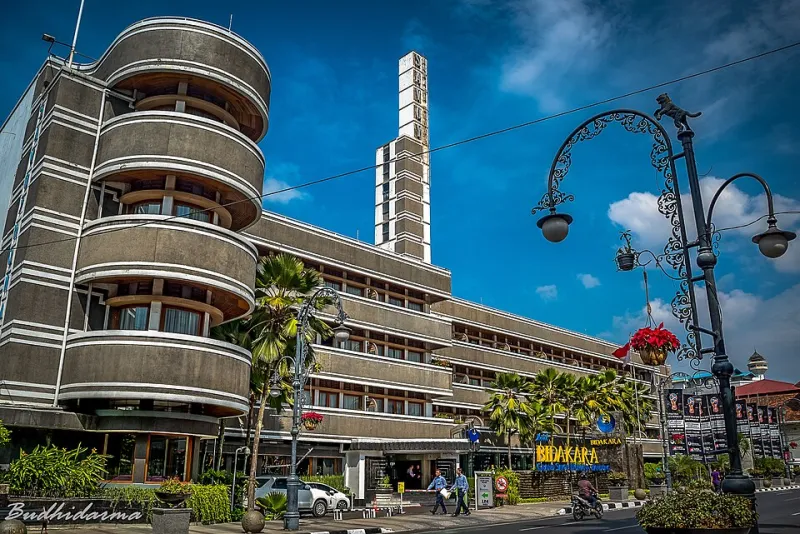
Photo: Budhi Darma, CC BY-SA 3.0, via Wikimedia Commons
In the spring of 1955, a cool highland city of roughly half a million people on the island of Java briefly became the most-watched address on Earth. Delegates from 29 nations — Japan and Liberia, Egypt and the Philippines, China and Ethiopia — met in Bandung for a week in April, representing around 600 million people, about a quarter of humanity at the time.
Most of their countries had been independent for less than a decade. Few had ever been invited to a global gathering on their own terms. And none of them had asked Washington's permission to be there, which was precisely the point.
The Meeting Was Set in Motion at Bogor
The idea did not fall out of the sky. In December 1954, the leaders of five recently independent Asian states — Indonesia, India, Burma, Ceylon (today's Sri Lanka), and Pakistan, often called the Colombo Powers — met at Bogor, south of Jakarta, to plan something larger. Indonesia's prime minister, Ali Sastroamidjojo, pushed the project hard. Jakarta saw itself as the natural host for a postcolonial world that had not yet found its voice, and Sukarno, the country's first president, wanted that voice to be heard from Java.
The guest list was broad on purpose, and awkward on purpose. It included the People's Republic of China, North Vietnam, Japan, and a long roll of newly sovereign African states. It did not include the Soviet Union, and it did not include the United States.
Washington's Uncomfortable Spring
American officials were not thrilled. 1955 was a tense year in the Cold War: the Korean armistice was barely two years old, France had just lost Indochina, and the Southeast Asia Treaty Organization — the Manila Pact — had been signed only seven months earlier, in September 1954. SEATO was built on the assumption that Asian nations would line up with one superpower or the other. Now a room full of them was preparing to say they would do neither.
Secretary of State John Foster Dulles had a phrase for this. He would later call neutrality between the blocs "an immoral and shortsighted conception." That line, delivered in 1956, sums up the official mood of 1955 pretty well.
The United States did not send an official delegation. It did send observers, including Congressman Adam Clayton Powell Jr. of Harlem, who reported back on a conference that was far more disciplined than Washington had expected. Meanwhile, the administration leaned on allies in the region, and Pakistan's membership in SEATO gave the American side a seat at a table it had publicly dismissed.
Sukarno Opens With a Bang
On April 18, Sukarno delivered an opening address titled "Let a New Asia and a New Africa Be Born." It was not a quiet speech. He described the gathering as the first intercontinental meeting of the world's colonized and formerly colonized peoples, and he framed the conference as a moral force rather than a military one. The room, by most accounts, stood up for it.
What followed over the next six days was less dramatic but more consequential: committee work. Delegates argued over whether to condemn the Soviet Union by name (they mostly avoided it), how to talk about colonialism without alienating allies, and whether economic cooperation could be arranged between countries that had been designed by colonial administrations to trade with Europe, not with each other.
Zhou Enlai's Charm Offensive
The surprise of the week came from Chinese premier Zhou Enlai. Expected to be combative, he instead played the conciliator, urging delegates to "seek common ground while reserving differences." He invited counterparts to lunch, softened the language of resolutions, and offered to open negotiations with the United States over Taiwan. That offer, made in Bandung, helped lead to the ambassadorial talks that began in Geneva in August 1955 — one of the first sustained diplomatic channels between Washington and Beijing.
Ten Principles and One Very Loaded Word
The conference closed with the Dasasila Bandung, a set of ten principles covering sovereignty, non-aggression, non-interference in internal affairs, equality among nations, and the peaceful settlement of disputes. One item was aimed squarely at the great powers: a rejection of collective defense arrangements "designed to serve the particular interests of any of the big powers." Read it alongside the Manila Pact and you can see exactly who the delegates had in mind.
In Indonesian, the phrase that carried the whole idea was bebas aktif — free and active. Not passive, not isolationist, and not a synonym for fence-sitting. Jakarta's argument was that a country could be independent-minded and still engaged with the world. It remains the official description of Indonesian foreign policy to this day.
How Seriously Did Washington Take It?
Seriously enough to change tactics. The Eisenhower administration poured money into cultural exchange, technical assistance, and student programs across Asia and Africa, partly as a counterweight to the Bandung spirit. The people-to-people program launched in 1956 was, in its own way, a reply to that week in West Java.
And in Indonesia itself, the anxiety curdled. By 1958, the CIA was quietly backing regional rebels in Sumatra and Sulawesi in an attempt to topple Sukarno — an operation that failed and embarrassed Washington. Whatever the merits of the policy debate at the time, the episode is a reminder of how unnerving a room full of neutral countries can be to a superpower.
From Bandung to Belgrade — and to Now
The conference's real legacy arrived six years later, when the Non-Aligned Movement held its first summit in Belgrade in 1961, with Sukarno, Nehru, Nasser, Nkrumah, and Tito in the same room. The vocabulary of the "Global South" — a phrase that shows up in every UN debate today — grew out of that lineage.
In 2005, Bandung hosted a commemorative Asian-African Summit that produced a new strategic partnership. In 2025, the seventieth anniversary brought delegates back to the same streets to argue about many of the same questions.
That is the part worth noticing in 2026. In a world where middle powers hedge, where sanctions are dodged, and where a growing list of capitals refuse to describe their foreign policy as a choice between Washington and Beijing, the Bandung delegates look less like idealists and more like early adopters. They did not end the Cold War in a week. They just proved that "we choose no side" could be said out loud, in public, and survive.