The Union's Other Army: How Javanese Coffee Beans Enlisted in the Civil War
Photo: Sadikibnusalim, CC0, via Wikimedia Commons
A Haversack With a Global Address
If you could open a Union soldier's haversack in 1863, you would find hardtack, salt pork, maybe a pipe, and a small cloth bag of coffee. The beans were often dark, uneven, and roasted in batches so small that they fit in a frying pan. Soldiers called the drink Java, whether or not a single bean had ever crossed the Indian Ocean.
That nickname was already older than the war. But the Civil War gave it new weight. Between 1861 and 1865, coffee stopped being just a grocery item in the Northern states and became something closer to a military necessity — a hot, bitter, and deeply reassuring ritual in a conflict that disrupted nearly every trade route Americans depended on.
Before the War: Brazil First, Java for the Special Shelf
In the decades before the fighting, most American coffee came from Brazil and the Caribbean. Rio coffee was cheap and plentiful; Cuban and Puerto Rican beans filled in the gaps. Java coffee, grown on Dutch colonial plantations in the East Indies, was the expensive stuff. It sat on the top shelf of New York and Boston grocers, sold as a luxury with a whiff of empire about it.
American clipper ships had been sailing to Batavia for decades, part of the same sprawling trade that carried tea, spices, and porcelain. The voyage was long, the insurance costly, and the cargo precious. Java beans were prized for their heavy body and low acidity — a cup that could survive bad water and careless brewing. When Americans said Java, they meant coffee from a specific place, but they also meant something rich and far away.
The Blockade Rewrites the Menu
Then the war began, and the old supply chains began to creak. The Union blockade of Confederate ports choked off Southern imports and sent prices climbing across the board. Shipping insurance rose. Merchant captains chose safer routes. In the North, coffee remained available, but it was no longer a casual purchase. Households stretched their supplies, mixed beans with chicory or rye, and reused grounds until the brew turned pale.
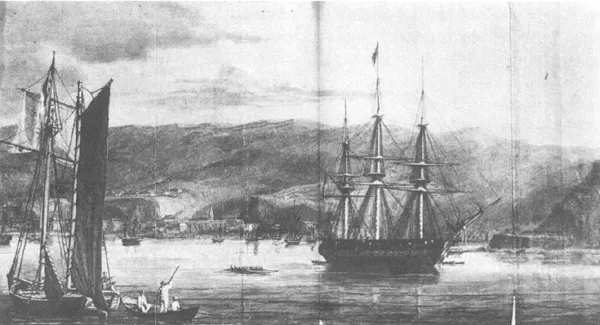
The uncertainty pushed Northern merchants to look more eagerly toward the Dutch East Indies. Java coffee had always been a premium item; now it became a strategic one. Ships left New York and Boston for Batavia, loaded with American goods and returned with sacks of green beans. The trade was not new, but the war made it feel urgent.
There was a shadow on every sack. The Dutch had built their coffee economy on the Cultivation System, a colonial policy that required Javanese farmers to plant export crops for the government. The beans that reached American campfires were grown under coercion as well as care. Union soldiers did not need to know that history to drink the coffee, but it traveled with the cargo all the same.
Campfire Chemistry
On the ground, coffee was less a commodity than a small daily engineering project. Soldiers roasted green beans in skillets, ground them with the butts of rifles, and boiled the result in tin cups over smoky fires. The result was thick, gritty, and strong enough to wake a man after a night march. Officers drank it. Privates drank it. Pickets drank it while staring into the dark.
Coffee also did something harder to measure. It gave shape to a day. A soldier who had coffee had a moment that felt almost normal, even when the next hill might hold artillery. In letters home, men mentioned coffee the way they mentioned weather and mail — as a small fixed point in a world that kept moving.
Union rations included coffee, and the army tried to keep it coming. But the supply was never as tidy as the paperwork suggested. Beans arrived green, or stale, or mixed with chaff. Soldiers traded, hoarded, and complained. The word Java stuck because it sounded better than ersatz, and because the real thing — when it came — was worth the wait.
The Word That Stayed
After the war, the habit did not fade. Americans kept drinking coffee in quantities that startled European visitors, and they kept calling it Java. The word moved from grocery labels to lunch-counter slang. A waitress might ask if you wanted a cup of Java, and no one checked the shipping manifest.
It is one of the small linguistic souvenirs of a global trade route. A colonial crop from the Dutch East Indies became a Yankee shorthand for a morning jolt. The bean had traveled from terraced hillsides in Java to Batavia's warehouses, across two oceans, and into a tin cup beside a campfire in Virginia.
The Last Sip
The Civil War did not create American coffee culture. But it hardened the connection. Scarcity made the drink matter more, and the war made the word Java ordinary. Today the phrase is casual, almost weightless. In the 1860s it carried the distance of empire, the risk of blockade, and the simple comfort of a hot cup before a long day. That is a lot of history for three syllables.