A Volcano in the Sky: What Americans Saw in the Red Sunsets of 1883
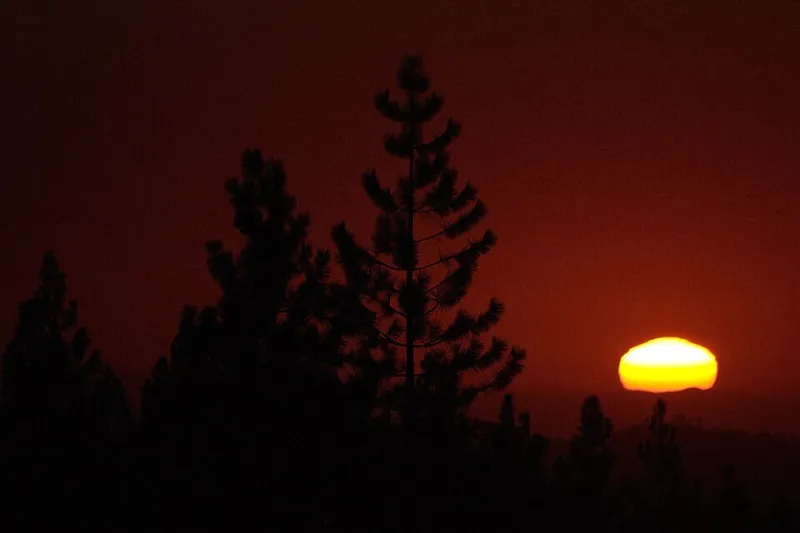
Photo: Pacific Southwest Region 5, Public domain, via Wikimedia Commons
Strange Weather Over the Midwest
In the late summer and fall of 1883, people across the United States began looking up. Sunsets turned a shade of red that seemed almost theatrical. Some evenings the western sky glowed orange and crimson long after the sun had gone. In a few places, observers swore the sun looked green, or the moon turned blue.
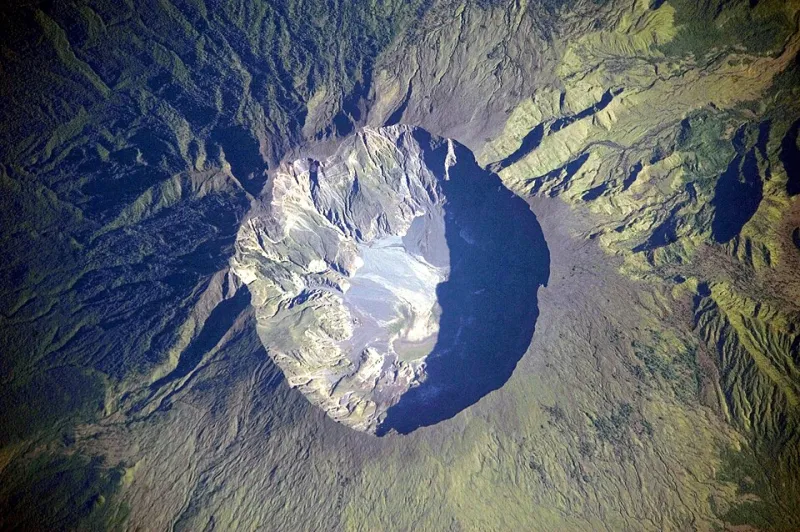
These were not hallucinations. They were the atmospheric aftershocks of a volcanic eruption on the other side of the world. On August 27, 1883, Krakatoa — now usually written Krakatau — exploded in the Sunda Strait between Java and Sumatra. The blast was one of the loudest sounds in recorded history. It sent a tsunami across the coastlines of the Dutch East Indies and killed tens of thousands of people.
In the United States, no one felt the ground shake. But they saw the sky change.
The News Arrives by Wire
The first reports reached American newspapers by telegraph, then still a relatively new technology for everyday news. The dispatches were short, expensive, and often confused. One paper reported that a small island had vanished. Another described ships covered in ash. Editors in New York and Chicago ran bulletins alongside shipping news and local politics, unsure what to make of a catastrophe so far away.
The distance was part of the story. In 1883, a volcanic eruption in the East Indies could not be filmed, recorded, or live-tweeted. It could only be described. And the descriptions arrived in fragments, filtered through colonial officials, ship captains, and telegraph operators. Americans read about a place most of them could not locate on a map.
Then the sky over their own farms and cities began to offer its own evidence.
A Planet-Sized Dust Cloud
Scientists soon connected the dots. The eruption had thrown enormous quantities of ash and sulfur dioxide into the upper atmosphere. There, the particles spread around the globe, catching and scattering sunlight in ways that produced vivid sunsets and unusual optical effects. The Royal Society in London launched a massive study. Observers in Europe and North America sent in reports of red skies, blue moons, and halos around the sun.
For American readers, the explanation was both reassuring and unsettling. It was reassuring because it turned a strange phenomenon into a natural process. It was unsettling because it showed that a disaster on the other side of the planet could alter the view from a Kansas porch.
The Amateur Weather Service
Much of what we know about those skies came from ordinary people who wrote things down. Farmers noted the color of the sunset in diaries. Lighthouse keepers sent letters to local newspapers. Schoolteachers and doctors described the moon and the haze. The U.S. Army Signal Corps, which handled weather observations at the time, received reports from its stations, but the broader record was built by amateurs with pens and patience.
That was new. The Krakatoa sky was one of the first global scientific events in which ordinary Americans could participate without leaving home. They did not need a laboratory. They needed a window.
The First Global Disaster Story
Historians often describe the Krakatoa eruption as an early example of a global media event. The telegraph made the news travel faster than any previous natural disaster. The skies made the story visible to people who would never read a scientific paper.
But the beauty was not the whole story. In the Sunda Strait, the eruption destroyed villages, swept away ships, and left survivors searching through ash. The red sunsets that Americans admired were the same event that killed tens of thousands of people in the Dutch East Indies. That tension — distant spectacle and local horror — is part of what made Krakatoa a modern disaster story.
After the Red Faded
The skies eventually returned to normal. The dust settled. The climate cooled slightly for a time, and harvests in some parts of the world suffered. In the United States, the memory of the red sunsets faded into newspaper clippings and scientific reports.
But something had changed. Americans had learned that the atmosphere is a shared room. A volcano in Indonesia could tint the evening over Ohio. A telegraph cable could carry the news before the sky itself explained it. The world was becoming connected in ways that were exciting, confusing, and a little frightening.
Today, when a volcanic cloud drifts across the globe or a distant disaster fills our screens, it is worth remembering 1883. The medium has changed. The lesson has not.